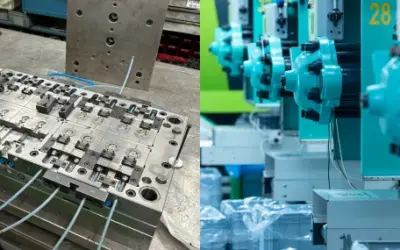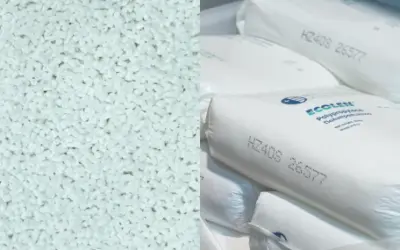

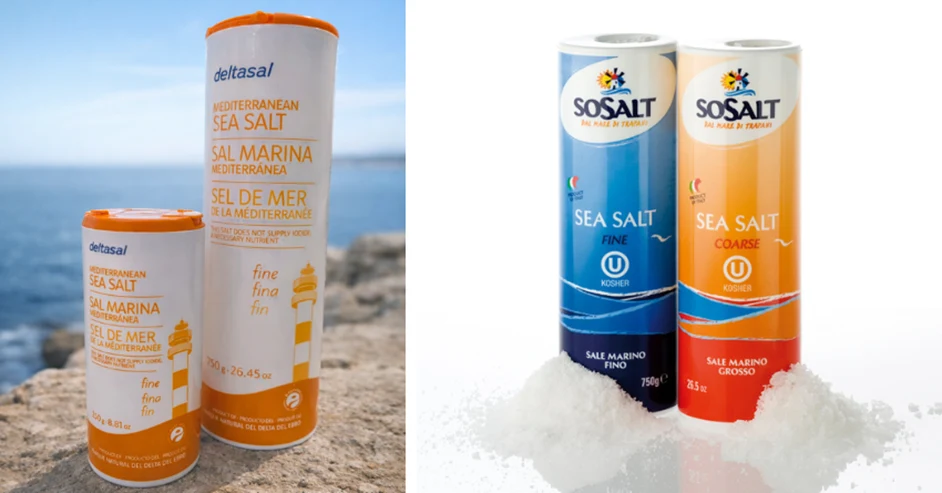
Industrial printing plays a key role in the manufacturing of plastic packaging. Beyond its aesthetic function, it enables the incorporation of technical information, traceability elements and product identification markings that must remain legible and resistant throughout the product’s entire life cycle.
Achieving stable and repeatable printing results does not depend solely on the printing machine itself. Other factors, such as the substrate material, surface treatment, prepress processes and the inks used, have a direct impact on the final quality.
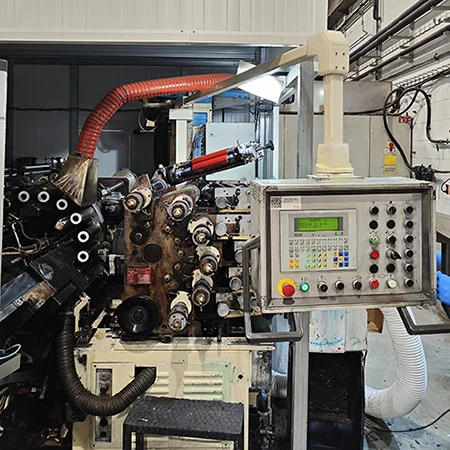
There are various industrial printing technologies, each with its own characteristics, advantages and areas of application. Among the most commonly used in this type of application are dry offset, screen printing, conventional offset and pad printing.
Conventional offset printing, also known as wet offset, transfers ink from a metal plate to a rubber blanket, which then prints onto the substrate. The process uses a dampening solution to prevent ink from adhering to the non-image areas of the plate. It remains the dominant technology for graphic printing on paper, cardboard and flexible plastics.
Pad printing is an indirect printing process that uses a flexible silicone pad as the transfer element. The artwork is engraved onto a metal cliché, the ink fills the engraved areas, and the silicone pad picks up and transfers the image onto the part. Its main advantage lies in its ability to print on complex geometries, making it ideal for small three-dimensional components such as caps, medical devices and technical parts.
At Triana, the industrial decoration technologies used in our production processes are Dry Offset and screen printing, both of which are explained in greater detail below.
The importance of prepress
In any industrial printing process, quality begins long before the ink is transferred onto the workpiece. The pre-press stage is essential for ensuring sharpness and consistency throughout production.
Colour management and pantone matching
Accurate colour definition is critical to maintaining consistency between production batches and ensuring compliance with corporate branding guidelines or customer specifications.
Using Pantone references allows manufacturers to work with precise and repeatable colour standards, which is particularly important in industries where visual consistency is a key quality requirement.
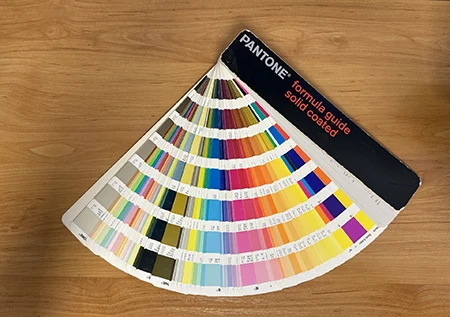
Even minor colour variations may lead to visible differences between production batches. For this reason, factors such as ink viscosity, opacity, curing conditions and ink formulation must be carefully controlled.
Design adaptation for six-colour printing and limited gradients
One of the first tasks during prepress is adapting the original artwork to the actual conditions of the printing process. Although Dry Offset technology can operate with multiple spot colours, Triana‘s equipment is configured to print with up to six colours. Consequently, artwork must be adapted to this configuration in order to achieve optimal colour reproduction and finishing quality.
Customer artwork is often originally designed for digital environments or printing processes with fewer technical limitations. Adapting these designs involves reviewing the number of colours, determining which colours can be simplified or replaced by equivalent Pantone references, and ensuring that the final artwork is technically feasible within the available printing stations.
In direct printing systems for plastic packaging, continuous gradients are difficult to reproduce accurately. Ink is applied in discrete layers, and the halftone screen presents limitations in both resolution and adhesion to the substrate. Therefore, gradients must be simplified or adapted to technically reproducible screen ranges, avoiding extreme values such as 1–5% tint areas.
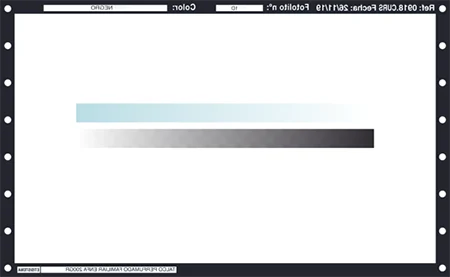

This adaptation stage requires close communication between the prepress team and the customer, as it may involve proposing modifications to the original design that, although visually subtle, are essential from a technical standpoint.
Film positives and artwork preparation
Film positives continue to play an important role in several industrial printing systems, particularly in screen printing and plate preparation processes. A film positive is a transparent negative containing all the information associated with each colour or ink layer of the design.
Its purpose is to transfer the original artwork accurately to the printing elements, ensuring:
- Definition
- Registration accuracy
- Colour alignment
Improper artwork preparation may lead to production deviations, registration defects or loss of definition in text and graphic elements.
Printing plates, exposure and Computer-to-Plate (CTP)
Printing plates are responsible for transferring ink onto the part with the precision required by the process. Depending on the printing technology, characteristics such as material composition, durability, engraving depth and ink transfer capability may vary.
Traditional plate manufacturing relies on an exposure process. The film positive is placed over a photosensitive polymer plate, and both are exposed to ultraviolet radiation in an exposure unit. UV fluorescent lamps harden the plate emulsion in areas not covered by the black sections of the film.
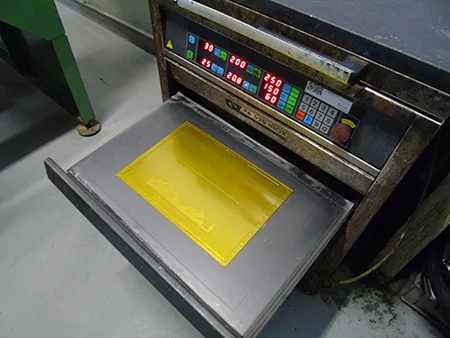
After exposure, the plate undergoes a brushing process. Water and mechanical brushes remove the unhardened polymer from areas protected by the film, creating a raised relief image that will ultimately receive and transfer the ink. This relief determines the final quality of the printed graphics.
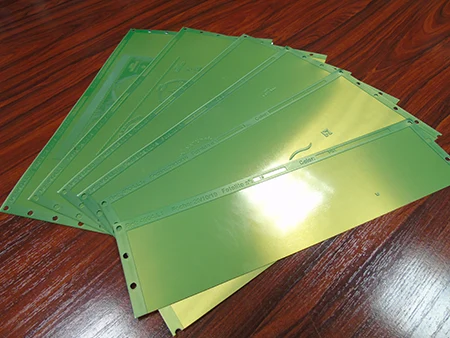
Computer-to-Plate (CTP) technology represents the digital evolution of this process. Instead of producing an intermediate film positive, the digital artwork is engraved directly onto the plate using a laser system, eliminating one process step and reducing potential sources of error.
CTP technology offers greater precision when reproducing fine screens and gradients, improves consistency between production runs and reduces setup times.
Plate engraving is particularly critical in high-precision applications because it directly influences:
- Graphic definition
- Ink transfer volume
- Print uniformity
- Repeatability between production runs
Colour registration
Even minimal misalignment between colours can significantly affect the final visual quality of the product. This adjustment, known as registration, consists of accurately aligning each printing plate so that all colours are deposited exactly where intended during the printing process.
In practice, registration adjustments are performed using the fine adjustment mechanisms available on each printing station. These mechanical controls allow operators to move the plate and roller assembly both axially and circumferentially. Adjustments are made visually on the blanket before the container enters the machine, comparing the print result against the approved sample and production specifications.
Surface treatment of plastic parts
Not all plastic materials exhibit the same adhesion properties. Materials such as polypropylene (PP) and polyethylene (PE) have low surface energy, making proper ink adhesion more difficult.
For this reason, many industrial printing processes require preliminary surface treatments to increase surface tension and ensure adequate ink anchorage.
Flame treatment of plastic packaging
Flame treatment is one of the most widely used surface treatments in industrial printing on plastic packaging. A controlled flame modifies the surface characteristics of the material, improving ink adhesion.
Insufficient surface treatment may result in adhesion failures, ink peeling or poor chemical resistance during the product’s end use.
Printing technologies at Triana
Dry Offset
Also known as dry offset or indirect letterpress, Dry Offset is one of the most widely used technologies for high-volume industrial printing on plastic packaging.
Unlike conventional offset printing, Dry Offset does not require a dampening solution. Instead, the polymer plate transfers the ink directly onto a silicone blanket, which then prints onto the rotating container.
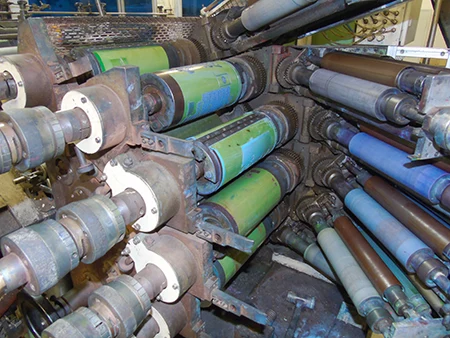
Dry Offset enables high-speed multicolour printing on cylindrical surfaces while maintaining excellent repeatability. The inline configuration of multiple printing stations allows up to six colours to be applied in a single pass, making it a highly efficient solution for large-scale production.
Its main advantages include:
- High productivity
- Process stability
- Accurate colour registration
One of Dry Offset’s greatest strengths is its ability to maintain excellent print quality even in production runs involving millions of units.
At Industrias Plásticas Triana, Dry Offset is our primary industrial decoration technology, with equipment capable of printing up to six spot colours on materials such as PP and PS while maintaining high standards of quality and repeatability in large production volumes.
Industrial screen printing in Clean Room environments
Screen printing remains a widely used technology in industrial applications due to its ability to deposit thick ink layers with excellent coverage and durability. Unlike other printing systems, it allows larger amounts of ink to be applied to the surface, resulting in outstanding resistance to handling and wear.
The process is based on a mesh stretched over a rigid frame. Using a photosensitive emulsion, the areas that should not be printed are blocked, while the ink passes through the open areas of the mesh when a squeegee moves across the screen.
Screen printing is particularly suitable for technical components, parts with specific geometries and applications requiring high mechanical or chemical resistance. It is also ideal for products where markings and identification information must remain legible throughout the entire product life cycle.
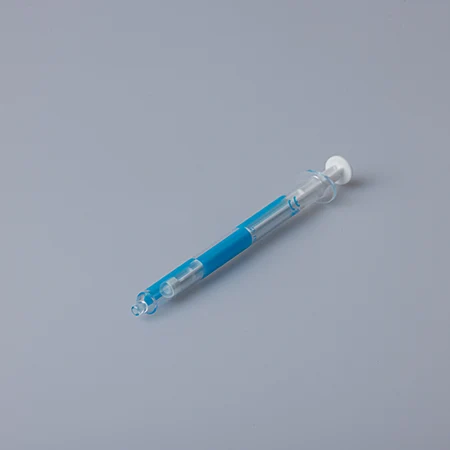
At Triana, we operate a screen-printing machine installed in a Clean Room environment, specifically dedicated to the decoration of dosing syringes and vaginal applicators. This allows us to incorporate markings and technical information with the precision and durability required for these highly demanding applications.
Industrial inks and finishing options
Industrial inks must guarantee not only visual quality but also resistance to the conditions the final product will face during use.
UV inks
UV inks have gained significant importance within the industry due to their almost instantaneous curing capability through ultraviolet radiation. This feature enables high production speeds without compromising print quality.
In addition to improving productivity, UV inks provide excellent mechanical and chemical resistance, characteristics that are especially valued in sectors where packaging is subjected to constant handling or exposure to different substances.
Main advantages include:
- Fast curing
- High resistance
- Process stability
- Easy integration into automated production lines
Varnishes and surface protection
The application of varnishes protects printed surfaces against abrasion, chemicals, friction and surface degradation. In addition to their protective function, varnishes can also provide specific visual finishes, such as gloss or matte effects.
Quality control in industrial printing
Detecting a defect once production has been completed results in additional costs, wasted time and potential customer issues. For this reason, quality control in industrial printing cannot be limited to a final visual inspection at the end of the production line; it must be integrated throughout the entire process.
Among the most common quality controls are:
- Adhesion tests: used to verify that the ink remains properly bonded to the plastic surface and does not peel off during use or handling.
- Surface energy measurement: the surface energy of the substrate is measured before printing to confirm that the previous treatment, such as flame treatment, has been effective. Special test inks are used to ensure that the material has reached the required surface tension level to guarantee proper ink adhesion.
- Visual inspection and registration verification: aimed at detecting defects such as smudges, insufficient ink coverage, finishing deviations or colour misalignment. Registration verification ensures the accurate superposition of colours and graphic elements, preventing visible misregistration between inks.
Industrial automation and integration
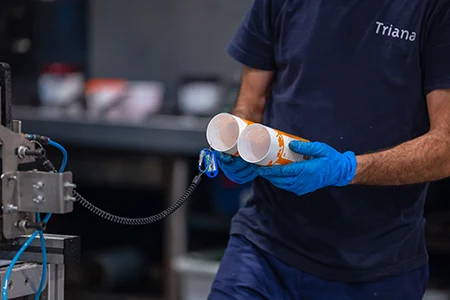
Current industry trends are moving towards increasingly automated and fully integrated production processes. The incorporation of robots, automated handling systems, machine vision technologies and digital controls enables manufacturers to improve efficiency, reduce errors and increase process repeatability.
In high-volume manufacturing environments, automation provides not only productivity gains but also greater process stability. The ability to monitor critical parameters and detect deviations in real time helps maintain the quality standards required by highly demanding industries.
The integration of injection moulding, automated handling, and printing processes is particularly important in large-scale production environments and in sectors with stringent technical requirements.
Conclusions
Industrial printing on plastic components is a complex process involving multiple technical factors. Final print quality does not depend exclusively on the printing technology used. Although the printing system itself is a key element, the final result is also influenced by numerous factors occurring before, during and after the printing process.
Material preparation, proper colour management, ink selection and surface treatments applied to plastic parts all have a direct impact on print definition, adhesion and durability.
Likewise, process automation and the implementation of appropriate quality control procedures help maintain production stability and minimize process deviations.
For this reason, companies specialised in industrial printing must approach each project from a comprehensive process perspective, combining technical expertise, advanced technologies and robust production control systems to ensure consistent results regardless of production volume.