
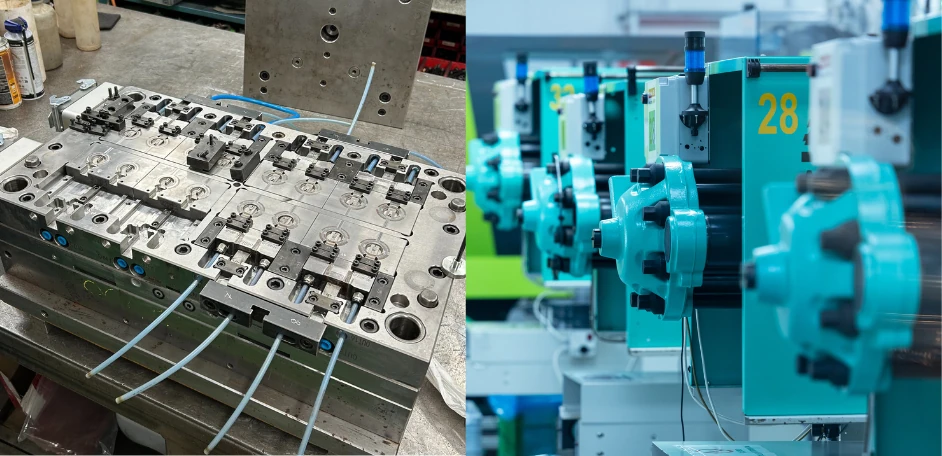
The mould is the true heart of the process: it’s the tool that turns a design into a real part, cycle after cycle, over millions of repetitions.
Behind every part that comes off a plastic injection moulding machine, there’s an engineering process that starts long before the first shot of material: decisions on geometry, injection system, cooling, ejection and finish that shape both the quality of the part and the customer’s entire project.
En este artículo repasamos todo este recorrido completo.
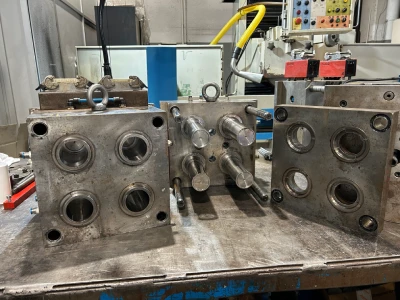
Design and concurrent engineering
Every mould project starts with a product design. But before a single cavity is machined, that design goes through a concurrent engineering process: the manufacturer, the customer and, often, the product designer review the geometry together to spot problems early.
DFM: design for manufacturability
DFM (Design for Manufacturability) analysis reviews the part design for non-uniform wall thicknesses, insufficient draft angles, areas where material builds up, or geometries that make filling difficult. A change at the design stage costs one revision; the same change caught once the mould is already in production can mean weeks of delay and costly modifications.
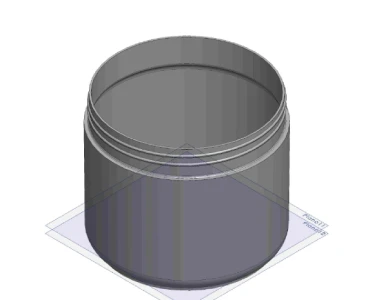
Mould filling simulation
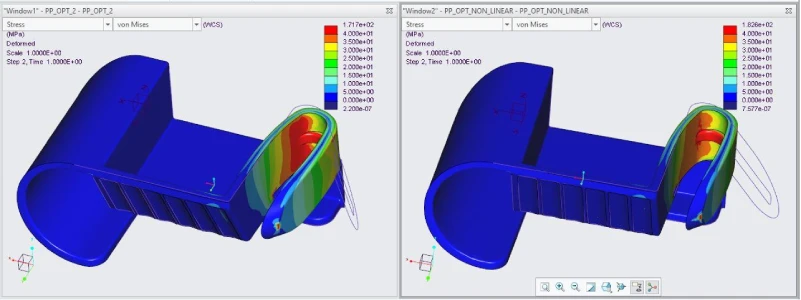
Before the mould is built, it’s common practice to digitally simulate how the molten material will flow inside the cavity. This simulation makes it possible to predict weld lines, air traps, sink marks or filling imbalances in multi-cavity moulds, and to adjust the design or the position of the gates accordingly.
Injection points: where the material enters
The injection point, or gate, is where the molten material enters the mould cavity.
A key decision at this stage is the type of runner system that feeds those gates: cold runner or hot runner. Neither option is better in absolute terms; it depends on production volume, the number of colour changes expected and the project budget.
| Cold runner | Hot runner | |
| Colour changes | Quick and easy colour changes. | Slower, more costly colour changes |
| Waste material | Produces sprue and runner scrap. | No material waste. |
| Mould cost | Lower upfront investment | Higher upfront investment |
| Cost per part | Higher material consumption and regrind | Lower material costs in the long run |
| Production cycle | Slightly slower (the sprue has to be removed) | Faster and easier to automate |
Learn more:
https://grupoempresarialmypa.com/tipos-de-sistemas-de-colada-fria-vs-caliente/
Mould cooling: the invisible factor that sets the cycle time
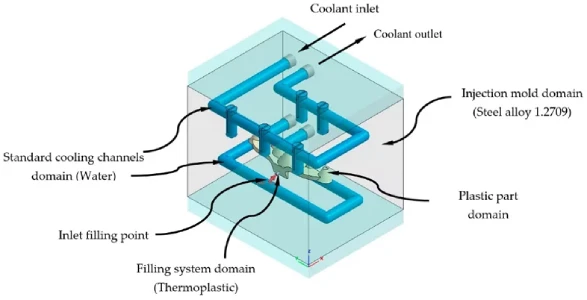
Cooling is often the least visible factor, yet it’s one of the biggest influences on cycle time and final part quality. A poorly designed cooling circuit can cause uneven cooling, leading to warpage, sink marks or internal stresses in the part.
Wherever possible, the cooling channels should follow the geometry of the part so that heat is extracted evenly.
Mould polishing and surface finish
The surface finish of the mould cavity is transferred directly to the part. That’s why polishing isn’t just a cosmetic concern: it also affects how easily the part releases from the mould, the adhesion of subsequent decoration (such as dry offset or screen printing) and the perceived quality of the final product.
There are different grades of finish, each with its own manual or mechanical polishing process. The choice should be made at the design stage, as it also determines the draft angles required.
Preventive mould maintenance
An injection mould is a precision tool that is constantly subjected to high-pressure, high-temperature cycles. Without a preventive maintenance plan, progressive wear on moving components, guides or sealing areas can lead to flash and defective parts.
Preventive maintenance is scheduled according to the number of cycles run, not just the time elapsed. Staying ahead of breakdowns with regular inspections always costs less than an unplanned production stoppage.
Our Triana mould shop: in-house machining and fine-tuning
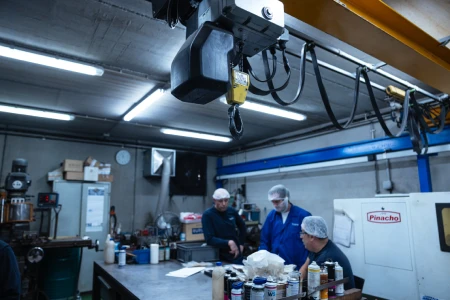
Having our own mould shop at Triana means we can act quickly whenever minor adjustments are needed. This in-house capability gives us a direct competitive edge in lead times and in how quickly we can respond to the unexpected.
Working with local mouldmakers
To build new moulds, we work with local mouldmakers, which lets us keep communication direct and agile throughout the project. Being close by cuts travel time for trials and adjustments, makes joint visits to the toolroom easy during the manufacturing phase and speeds up any last-minute changes before production starts. In a process where deadlines are often tight, having suppliers nearby is a real advantage when it comes to lead times.
3D printing for moulds and engineering
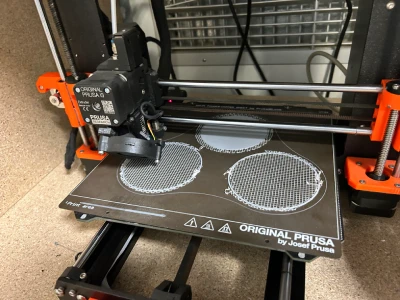
Having 3D printers in-house allows us to produce functional prototypes of the part before the final mould is machined. That way, we can validate geometry and ergonomics with the customer quickly and cost-effectively.
This significantly shortens development times: a design change that once meant modifying a machined cavity can now be validated first on a 3D-printed part, reducing the risk of costly errors in the final mould.
Automation and multi-cavity moulds: scaling up the process
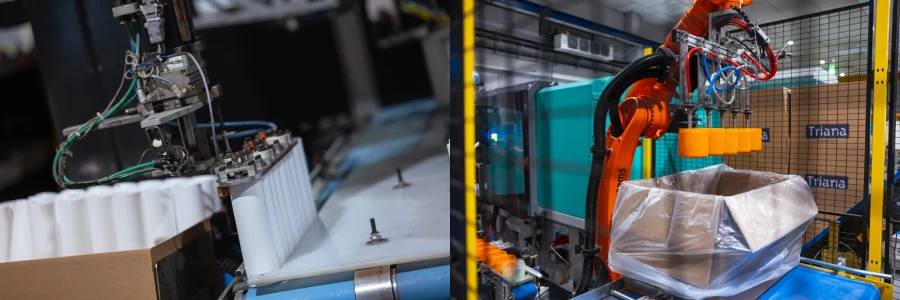
In high-volume projects, the mould doesn’t work alone. It’s integrated with automation systems that remove the part, separate it from the sprue (in cold runner systems) and place it ready for the next process, minimising manual intervention and the risk of handling-related defects.
Multi-cavity moulds, which produce several identical parts per cycle, require very precise fill balancing between cavities: if one fills before the others, differences in weight, density or finish appear between parts from the same batch.
Conclusions
A mould is the result of an engineering process that starts with the part design and continues throughout its service life in production, through maintenance, adjustment and continuous improvement. Decisions that may look purely technical at first glance have a direct impact on part quality, cycle time and the overall profitability of the project.
At Industrias Plásticas Triana, we have our own mould shop and an engineering team that supports every project from the initial idea through to series production, ensuring that every technical decision is aligned with the customer’s quality, lead time and cost objectives.